
Ultra Rare Types of EDS
In honor of EDS awareness month, let's give some love and awareness to those ultra rare types!
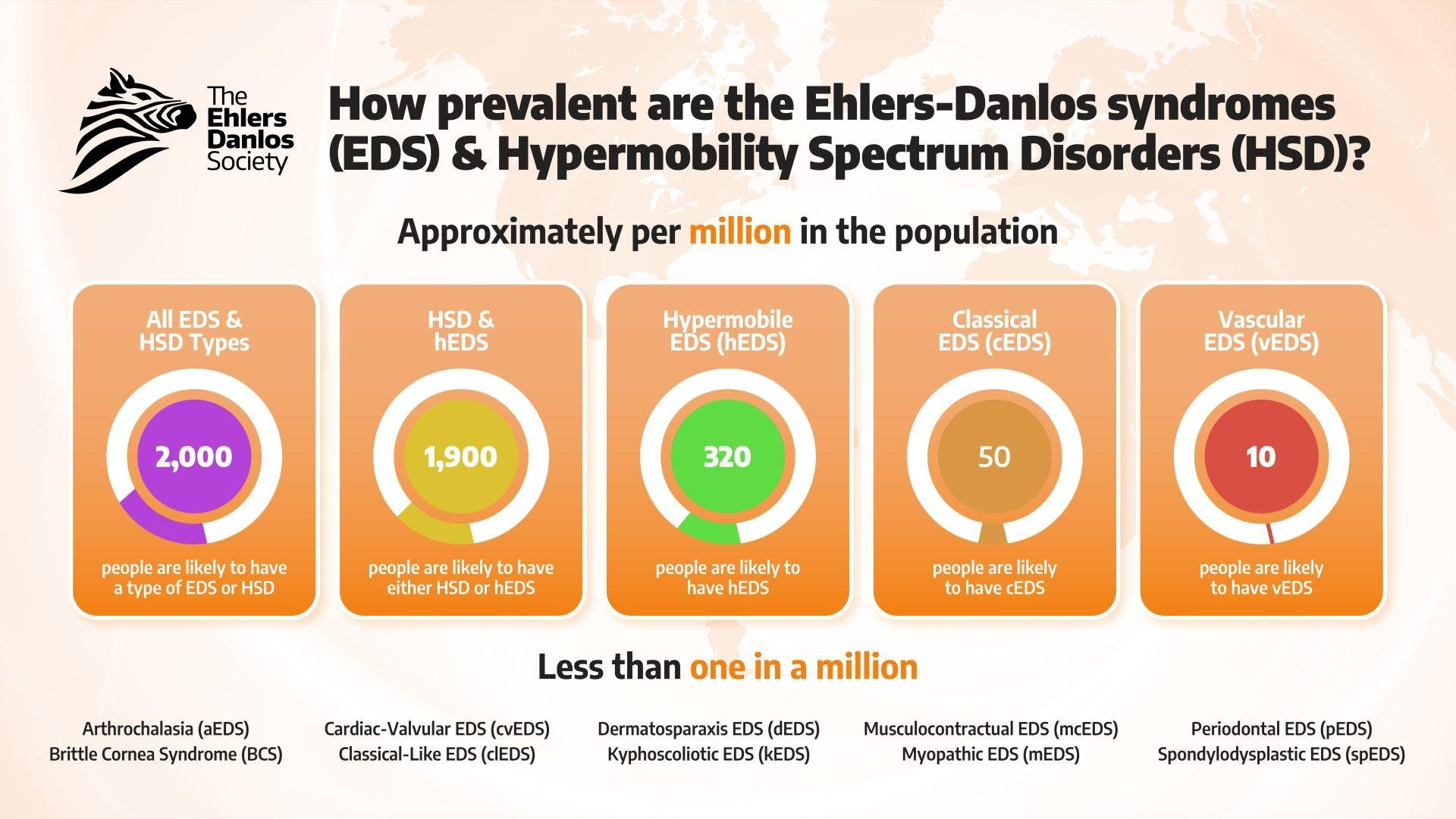
Last week, we established that hEDS is the most common type of EDS, followed by rare types: vEDS and cEDS. The remaining 10 types can be found via genetic testing. Each may present with similar traits but tend to have unique symptoms that can help identify a suspected type.
Periodontal EDS (pEDS): Gum disease and tooth loss
Kyshoscoliotic EDS (kEDS): Early onset of scoliosis and low muscular tone
Spondylodysplastic EDS (spEDS): Short stature, muscle weakness, limb bowing
Brittle cornea syndrome (BCS): Severe cornea of the eye issues and hearing loss
Arthrochalasia EDS (aEDS): Severe joint hypermobility and both hips dislocating at a young age
Musculocontractural EDS (mcEDS): Several muscle contractures at a young age with additional craniofacial features
Classical-like EDS (clEDS): Stretchy, velvety skin without atrophic scarring, leg swelling, foot deformities
Dermatosparaxis EDS (dEDS): Extremely fragile and loose skin with bruising and short limbs
Myopathic EDS (mEDS): Specific joint contractures and low muscle tone
Cardiac-valvular EDS (cvEDS): Severe heart valve issues
All types are included within the umbrella of Ehlers Danlos Syndrome. It’s important to use correct terminology when referring to hypermobility syndromes since hEDS isn’t the only type. At Empowered Movement we primarily treat hEDS/HSD, but EDS involves so much more than just hypermobility!
—
Additional Reading
Did you find something here that helped you on your own hypermobility journey? Join our mailing list to get tips like these delivered straight to your inbox every Wednesday!
Blog posts may contain affiliate links to products mentioned. Purchasing through these links helps support Jenna’s work - she may receive commission at no extra cost to you.
This blog is written based on personal experience and is not medical advice. Always ask your doctor for individual concerns and support.